Physical Address
Crimson Lynx Media Ltd
Scottish Provident House
76-80 College Road
London
HA1 1BQ


Physical Address
Crimson Lynx Media Ltd
Scottish Provident House
76-80 College Road
London
HA1 1BQ


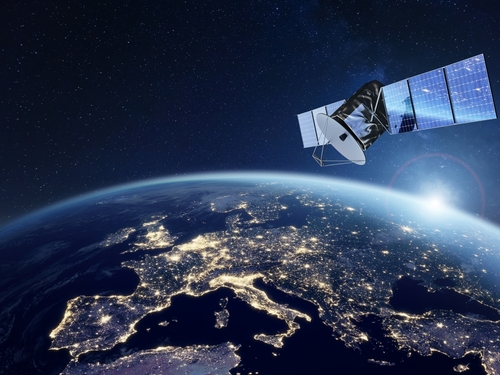
VodafoneThree will soon begin customer trials of direct-to-device satellite connectivity, marking the latest step to extend coverage to areas beyond terrestrial networks.
The trials form part of a £11bn network investment programme announced in June 2025 following the merger of Vodafone UK and Three UK to create VodafoneThree.
As part of that programme, the operator has pledged to roll out 5G standalone (5G SA) coverage to 99% of the UK population by 2030, rising to 99.96% by 2034.

The venture is a joint initiative between Vodafone Group and AST SpaceMobile aimed at enabling mobile operators to extend broadband connectivity using space-based infrastructure.
The trials will test technology capable of connecting standard smartphones directly to low-earth-orbit (LEO) satellites for voice calls, data and SMS, without the need for specialist devices or additional equipment.

The tests are intended to demonstrate how satellite connectivity could provide reliable coverage in rural and hard-to-reach parts where mobile masts are impractical or uneconomic.
This builds on a breakthrough a year ago, when Vodafone completed the world’s first video call from a standard smartphone connected directly to a LEO satellite. The call was made to a a BlueBird satellite operated by AST SpaceMobile from a rural location in Wales that had no terrestrial mobile signal.
VodafoneThree says it will become the first UK operator to trial the company’s services. Satellite Connect Europe will deploy five Europe-based ground stations to support the service and ensure compliance with regional spectrum regulation.
Andrea Dona, chief network officer at VodafoneThree, said the partnership would address persistent coverage gaps.
“This partnership with Satellite Connect Europe supports our ambition to deliver direct-to-device satellite connectivity capable of data, voice and SMS to our customers, leading to the elimination of coverage gaps,” he said.
Direct-to-device (D2D) satellite connectivity is now a key focus across the global mobile industry as operators look for ways to complement terrestrial networks.
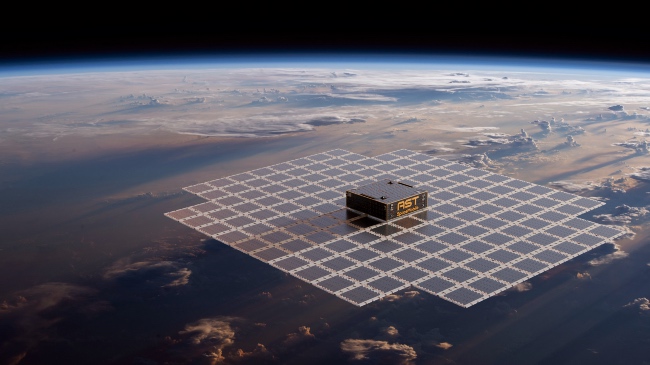
Traditional satellite services require dedicated terminals. But D2D connect standard smartphones directly to satellites using existing mobile spectrum. Early services are focused on emergency messaging, but the technology is rapidly evolving to support voice and mobile broadband.
Several major technology and telecom companies are investing in the sector. SpaceX is developing satellite-to-phone services through Starlink network with mobile operators including T-Mobile US. Meanwhile, Apple introduced emergency satellite messaging in 2022 via the Globalstar network.
Vodafone has been among the most active European operators working with AST SpaceMobile on tests that aim to integrate satellite coverage with standard mobile networks.
Satellite connectivity is expected to complement that rollout by providing coverage in the small percentage of locations where building terrestrial infrastructure remains impractical.