Physical Address
Crimson Lynx Media Ltd
Scottish Provident House
76-80 College Road
London
HA1 1BQ
Physical Address
Crimson Lynx Media Ltd
Scottish Provident House
76-80 College Road
London
HA1 1BQ


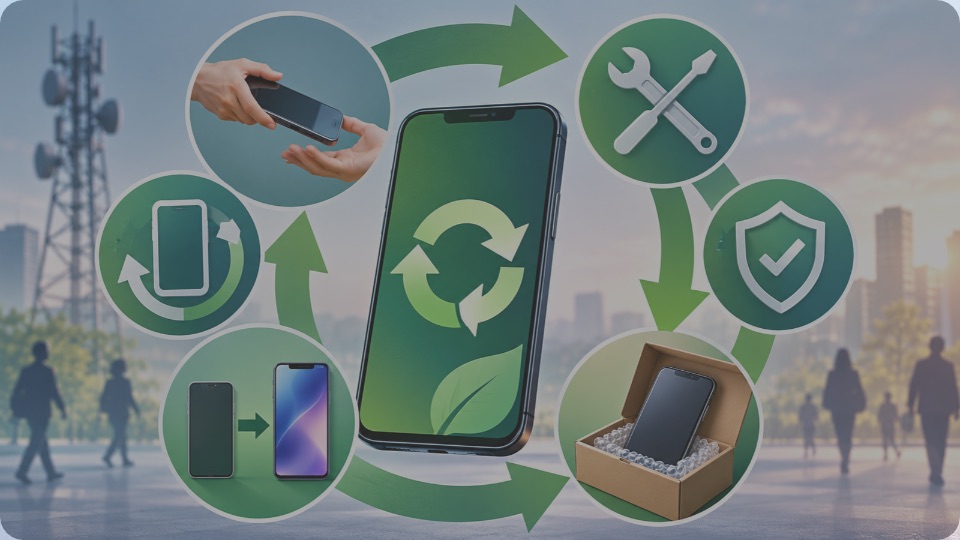
Mobile operators can increase revenues from refurbished product, but must overcome consumer reluctance, inconsistent device supply and operational inefficiencies to compete effectively.
That was the central message from a panel of senior network executives at Mobile News’ Circular Summit 2026, who discussed how trade-in, refurbishment and device lifecycle services are becoming increasingly important to operators’ commercial strategies.
The discussion featured Paul Franey, Head of Reverse Logistics at Virgin Media O2; Gary McCready, Commercial & Strategy Director at iD Mobile, Currys Plc; and Horace Francis, Director of Device Operations at VodafoneThree.


The panellists agreed that networks were well positioned to capture a greater share of the refurbished device market through their existing customer relationships, upgrade programmes and retail channels.
However, they acknowledged that independent marketplaces and specialist refurbishers continued to account for much of the secondary market, despite operators having direct access to millions of smartphone customers.
One of the biggest challenges facing operators is persuading customers to trade in devices they no longer use.
McCready highlighted consumer research showing that around a third of respondents were interested in trading in old technology but had not acted, while others were concerned about data security or uncertain about how the process worked.
He said many customers continued to keep old smartphones in drawers rather than return them for reuse or recycling.
The panel agreed that simplifying the trade-in experience and reassuring customers about the security of their personal data were essential to increasing participation.
Physical retail stores could play an important role by allowing customers to hand over devices, receive assistance with data transfers and obtain reassurance about secure data removal.
However, online trade-in channels could also outperform retail where the process was simpler and more convenient.
Francis said Vodafone had experienced stronger trade-in performance online than in stores, illustrating the importance of removing unnecessary steps from the customer journey.
The discussion also examined how longer smartphone lifespans were changing the economics of the mobile market.
With devices becoming more durable, software support extending and technological improvements between generations becoming less dramatic, customers were increasingly keeping smartphones for longer.
The traditional two-year replacement cycle was becoming less relevant, while longer financing agreements created new opportunities for operators to engage with customers at the end of their payment terms.
Francis said these points in the customer lifecycle could provide opportunities to recover devices, refurbish them and introduce customers to new products.
Trade-in values could also be used to settle outstanding finance balances and reduce the cost of upgrading.
The panel noted that premium smartphone launches continued to generate particularly strong trade-in activity, with participation exceeding 50 per cent in some cases.
However, sustaining trade-in activity outside major product launches remained a challenge.
Securing sufficient quantities of suitable devices was identified as another major obstacle to expanding refurbished sales.
Although operators have access to large customer bases, they cannot assume that their own trade-in programmes will generate enough stock to satisfy demand.
Franey said partnerships with specialist providers and external sourcing channels would remain important because operators were unlikely to become entirely self-sufficient in refurbished device supply.
McCready also highlighted the importance of maintaining consistent availability of refurbished stock.
Without reliable inventory, operators risk losing customers to established secondary marketplaces that can offer a wider selection of devices.
The panellists agreed that operators needed to consider the entire device lifecycle rather than treat trade-in as an isolated transaction.
This included offering customers a choice of repair, upgrade, refurbishment and resale options supported by efficient reverse logistics operations.
While sustainability remains an important driver of circularity, the discussion made clear that the commercial benefits were becoming equally significant.
Operators that recover devices directly from customers can potentially retain more value within their own ecosystems, improving margins and creating opportunities to offer more competitive prices.
Refurbished devices also provide an alternative for price-conscious customers who may be unwilling or unable to purchase the latest flagship smartphones.
The panel suggested that rising new-device prices could make trade-in incentives and affordable refurbished alternatives increasingly attractive.
However, circularity programmes must generate sufficient returns to justify the costs of collection, transport, testing, grading, refurbishment and resale.
Franey identified operational efficiency as a key area for improvement, including the potential use of artificial intelligence to optimise device routing and deliver more consistent grading.
Reducing processing costs and improving recovery values could help operators compete more effectively with specialist secondary-market businesses.
The panel also considered how circular economy strategies could extend beyond mobile handsets.
McCready argued that retailers and operators should encourage customers to return a broader range of unused electronic products, including chargers, accessories and other consumer technology.
He suggested that making reuse and recycling part of the wider retail experience could help normalise trade-in behaviour and encourage greater participation.
The discussion also highlighted the need for closer cooperation between operators, manufacturers, retailers and specialist lifecycle providers.
Each has a role in extending device lifespans, recovering equipment and ensuring that products retain as much value as possible through successive ownership cycles.
The panel concluded that operators had considerable room to expand their presence in the refurbished smartphone market but could not rely solely on their established customer relationships.
Convenience, competitive trade-in values, trusted data handling and consistent product availability would determine whether customers chose network-backed programmes over independent marketplaces.
For operators, the opportunity extends beyond generating additional revenue from used devices.
A successful circular strategy can also support customer retention, make upgrades more affordable and create additional sales opportunities throughout the device lifecycle.
The challenge is turning circularity from a collection of individual trade-in and refurbishment services into an integrated, commercially sustainable business that delivers value to customers and operators alike.