Physical Address
Crimson Lynx Media Ltd
Scottish Provident House
76-80 College Road
London
HA1 1BQ


Physical Address
Crimson Lynx Media Ltd
Scottish Provident House
76-80 College Road
London
HA1 1BQ



Global eSIM shipments reached 605 million units in 2025, according to the Trusted Connectivity Alliance (TCA), as operators expanded support and manufacturers pushed the technology deeper into the smartphone market.
Tthe TCA evoled from the SIMalliance in 2020, reflecting the continued expansion of the global SIM industry and the need for broader collaboration.
.The figure represents an 18 per cent year-on-year increase, reflecting the growing availability of eSIM-enabled devices and broader network support.

TCA data also shows a 43 per cent surge in consumer eSIM profile downloads, signalling a sharp rise in real-world adoption rather than simply device availability.
TCA members account for 85 per cent of the global eSIM hardware market, collectively shipping 523 million eSIM units during the year.

Despite the rapid growth of eSIM, the traditional SIM market remains substantial.
The TCA estimates the total available market for physical SIM cards reached 3.5 billion units in 2025, underlining the continued global importance of the format.
TCA members increased delivered SIM volumes by six per cent year-on-year, with growth recorded across Europe, the Middle East, Africa and parts of Asia.
The figures suggest the mobile industry will continue to operate with a hybrid SIM environment for several years, rather than seeing an immediate transition away from physical cards.
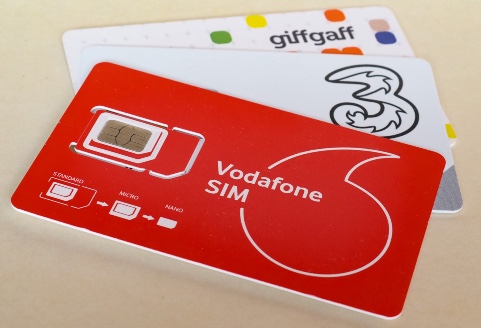
Smartphones are the main driver behind the technology’s expansion. eSIM capability is increasingly appearing across low- and mid-range devices, significantly expanding the addressable market.
Manufacturers such as Apple are also launching eSIM-only flagship models outside North America, signalling growing confidence in the maturity of the technology and the supporting network infrastructure.
The shift is helping boost both consumer awareness and adoption globally.
North America remains the most mature eSIM market, but adoption is accelerating elsewhere. According to the TCA, eSIM uptake doubled in both the Middle East and Africa and South America during 2025, highlighting increasing traction in emerging markets.
However, the rollout of eSIM services by local operators in these regions still trails North America, suggesting there is significant headroom for further growth.
The trend reinforces expectations that eSIM will steadily become the default activation method in the coming years, particularly as more mid-range Android devices ship with the capability built in.
Growth is also expected in the Internet of Things (IoT) as new industry standards simplify eSIM deployment in connected devices.
The GSMA eSIM IoT specification (SGP.32) has been designed specifically for large-scale IoT deployments. It aims to simplify remote provisioning and management of connected devices, making it easier for enterprises to deploy and manage large fleets of connected products.
Guido Abate, chair of the TCA board, said: “Global eSIM growth accelerated in 2025 as the benefits of the technology were realised across more regions, use cases and industries. With deployments and adoption set to continue rising, ongoing industry efforts to advance enabling standards and infrastructure will be key to promoting safe, reliable and consistent eSIM implementations everywhere.”

The report also highlights strong growth in Recommended 5G SIM deployments, which rose 33 per cent year-on-year among TCA members.
These SIMs are designed to support the highest levels of security, privacy and functionality in 5G and standalone 5G networks, enabling operators to deliver more advanced services.
India recorded the highest shipment volumes, reflecting the scale of its rapidly expanding 5G market.
North America remained the second-largest market, while Europe saw steady growth as standalone 5G networks continued to roll out.
Meanwhile, the Middle East and Africa recorded the fastest percentage growth, suggesting demand for advanced connectivity services is rising quickly across emerging markets.
Alongside technological change, the SIM industry is continuing efforts to reduce its environmental footprint.
In 2025, 45 per cent of SIM volumes reported by TCA members were shipped in the smaller half-SIM format, up from 37 per cent in 2024, reducing plastic use and packaging waste.
Meanwhile, more than 40 per cent of SIM cards produced in Europe were manufactured using eco-friendly raw materials.
The shift is also gaining momentum in developing markets. In the Middle East and Africa, the number of SIMs produced using eco-friendly materials more than doubled year-on-year, while shipments of half-SIM formats increased 40 per cent.