Physical Address
304 North Cardinal St.
Dorchester Center, MA 02124
Physical Address
304 North Cardinal St.
Dorchester Center, MA 02124


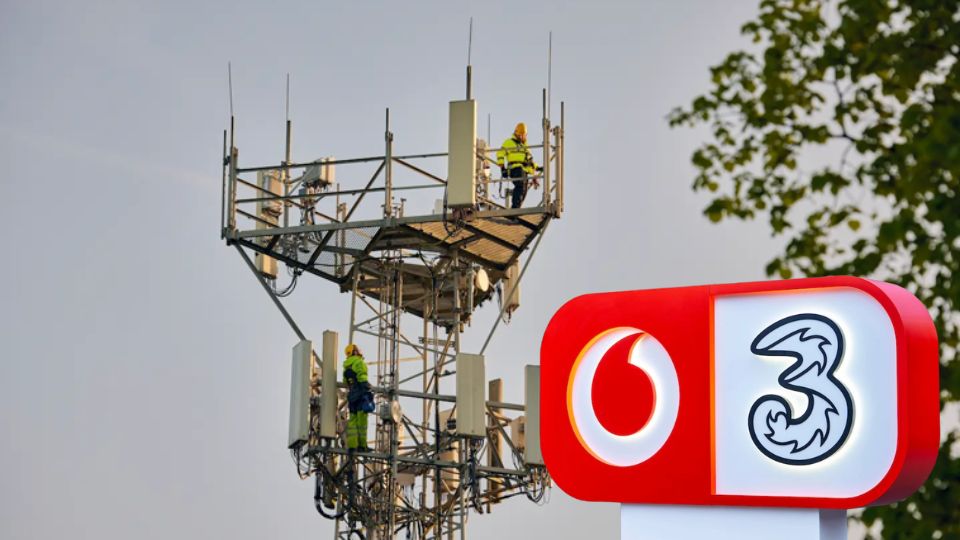
Vodafone’s mobile contract base dropped 73,000 during the third quarter of its financial year after the disconnection of thousands of low-value Business SIMs.
Three UK consumer losses also continued, although churn improved by 1.7 percentage points year-on-year, supported by what Vodafone described as a “best-in-class customer experience.”
The newly combined VodafoneThree business now serves more than 28 million customers, making it the biggest mobile network operator in the UK. Vodafone said integration has progressed quickly, with spectrum and network sharing already activated for 28.6 million customers who can now seamlessly use both networks.
Vodafone said its UK mobile performance remained commercially resilient in the third quarter of FY26, even as underlying service revenue declined slightly due to tough prior-year comparisons and the after-effects of major business contracts.
The operator reported a 42.8 per cent increase in mobile service revenue in the UK, driven primarily by the consolidation of Three UK following the completion of the merger on 31 May 2025. Oorganic mobile service revenue fell 1.8 per cent, reflecting strong comparative performance in both Business and Wholesale segments during the prior year.
Overall UK service revenue rose 31.1 per cent to £1.72 billion, while total revenue climbed 30.9 per cent to £2.12 billion. The company reiterated that the organic decline of 0.5 per cent had been expected.
Sub-brands VOXI and SMARTY added 38,000 customers in Q3, signalling continued momentum in value-focused propositions.

Upgrades
The company has modernised over 8,000 radio sites and eliminated 16,500 km² of partial coverage areas, while seven million Three and SMARTY users have seen 4G speeds improve by up to 40 per cent through combined spectrum.
Vodafone is pursuing a multi-brand consumer strategy spanning Vodafone, Three, VOXI, SMARTY and Talkmobile. In November 2025, it launched the “Vodafone Together Family” proposition, allowing households to bundle mobile and broadband services alongside security features via Vodafone Secure Net.
While the quarter showed pressure in enterprise revenue — Vodafone Business service revenue fell 4.3 per cent, or 5.4 per cent organically — the drop was attributed mainly to a previously flagged one-off project booked in the prior year.
Although the focus remains on mobile, Vodafone pointed to strong broadband momentum as part of its convergence strategy. The operator added 64,000 broadband customers in the quarter and now has the capability to serve 22 million households with gigabit speeds. It also added 11,000 fixed wireless access customers, reported within the mobile segment.
At group level, Vodafone said the UK integration is “progressing well and firmly on track,” reinforcing expectations that the business will help support delivery at the upper end of FY26 guidance.
The UK now accounts for 23 per cent of group service revenue, underlining its strategic importance as Vodafone seeks to extract synergies from the merger while stabilising underlying growth.
Despite the short-term organic softness, the scale benefits of the Three combination alongside network improvements and brand-led customer strategies position Vodafone to compete more aggressively in an increasingly converged UK telecoms market.