Physical Address
Crimson Lynx Media Ltd
Scottish Provident House
76-80 College Road
London
HA1 1BQ


Physical Address
Crimson Lynx Media Ltd
Scottish Provident House
76-80 College Road
London
HA1 1BQ


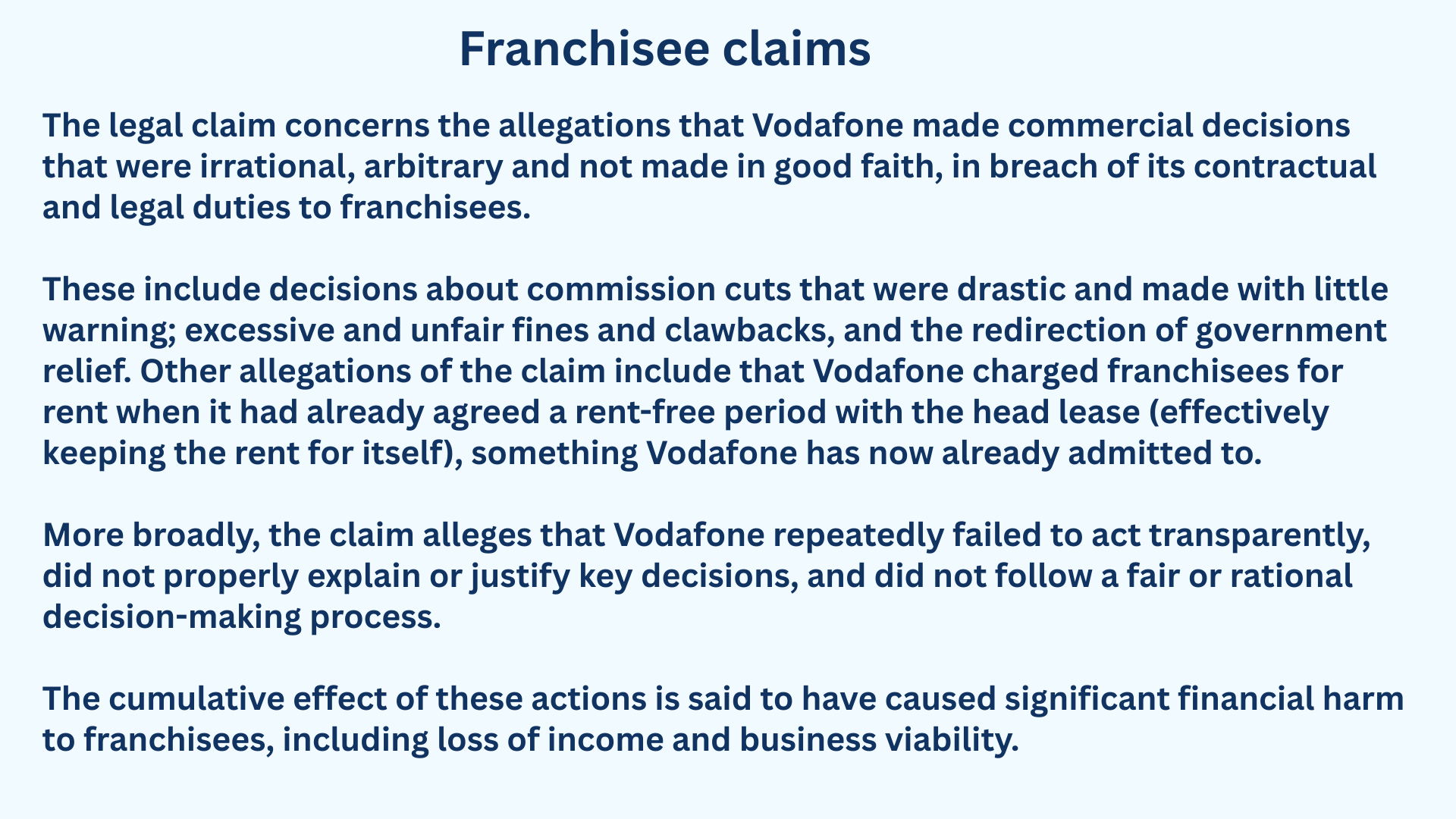
One of the former franchisees involved in a major legal claim against Vodafone has accused the operator of “systemic and appalling treatment” that he claims led to the collapse of his business and caused significant financial and personal harm.
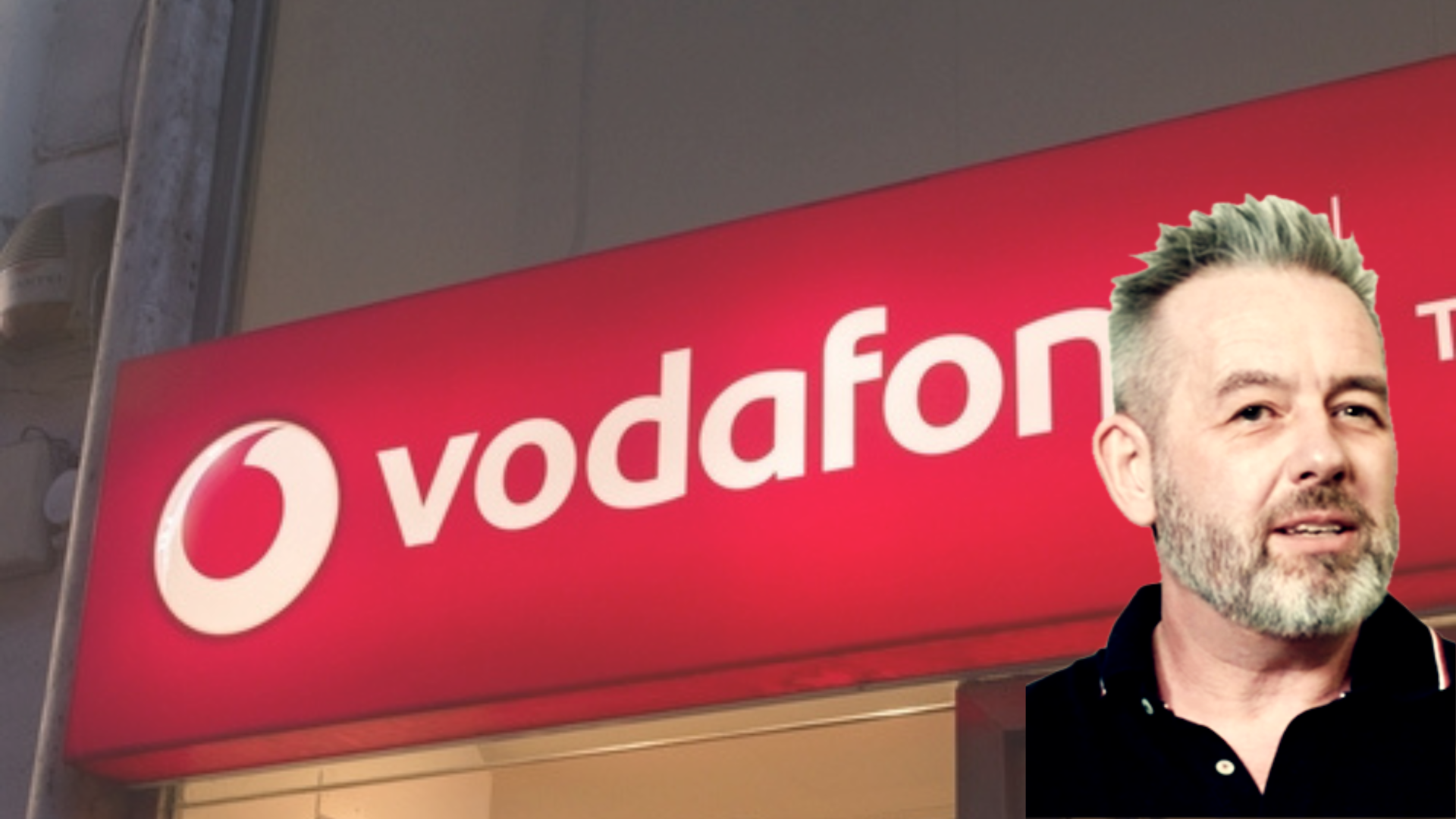
Brett Holmes (main pic) is among 62 claimants bringing a group action against Vodafone, collectively seeking around £85 million in damages.
Vodafone rejects the allegations saying ” “This is a complex commercial dispute between Vodafone and some former franchisees. While we fully reject the claims against us, we are sorry if any franchise had difficulty in operating their business.”

FULL VODAFONE REACTION: HERE.
Holmes alleges that many franchisees initially believed their difficulties were isolated, before later identifying what they describe as common issues across the network.

Some claimants report experiencing serious financial pressure and emotional distress. The case has also drawn political attention, with MPs across all parties including Richard Tice, Sir John Hayes and Luke Akehurst (below) expressing support for franchisees.

The dispute is progressing through the courts, with a split trial agreed and a further case management conference scheduled to address disclosure.
A full hearing is currently expected in November 2027. The allegations made by the claimants are expected to be tested in court.
Holmes said he anticipates Vodafone will argue the dispute is contractual in nature. However, he alleges that agreements were not applied fairly and that changes were introduced without reasonable notice.
Holmes has more than 30 years’ experience in the mobile retail sector, including running stores for Phones 4U and holding a regional director role with Samsung.
He told Mobile News that he invested personal savings to keep the shps running and took on multiple Vodafone franchise stores in what he believed was a long-term partnership model, but alleges he later encountered significant operational and financial challenges.
Holmes entered the Vodafone franchise programme in late 2020, after being approached with what he understood to be a model offering autonomy and long-term investment potential.
At its peak, he operated four stores, employing around 40 staff across East Yorkshire and Scotland. He said monthly operating costs in Hull alone reached approximately £35,000.
However, shortly after launching his first store in December 2020, the UK entered another national Covid-19 lockdown.
Holmes claims franchisees were initially told support would be available, including mechanisms to offset losses through adjusted commission structures. He alleges that this support was later withdrawn.
“I was told the support didn’t exist anymore,” he said. “I ended up putting in about £100,000 of my own savings just to keep the business afloat.”
He further alleges that some franchisees who joined the programme at a later stage received different forms of support, which he believes raises questions about consistency across the network.
Holmes claims that while a temporary Covid-related commission model initially helped stabilise revenues, this was later changed.
According to his account, Vodafone reduced commission rates and altered commercial terms, which he alleges significantly affected store profitability.
“We were encouraged to scale, to hire more staff, to grow,” he said. “Then overnight the model changed. Even hitting targets, the stores just weren’t viable anymore.”
Holmes said his stores performed strongly against typical high street conversion benchmarks but still recorded losses following the changes. He argues that the structure made profitability difficult to sustain.
In addition to commercial issues, Holmes has made a number of further allegations about his experience as a franchisee.
He claims he was subjected to verbal criticism during a group call and alleges that his subsequent complaint was not meaningfully addressed.
Holmes also alleges that representatives of Vodafone entered one of his stores and removed documents he considered relevant to his position, and that he faced a proposed financial penalty of £60,000. These claims have not been tested in court.
“It felt completely one-sided,” he said. “Decisions were faceless, automated, and there was no real way to challenge anything.”
He added that his concerns are focused on what he views as broader issues within the system, rather than individuals within the organisation.
Holmes said the experience had a significant effect on his health. Living with Ehlers-Danlos Syndrome, he said he had chosen the franchise model in part to better manage his condition.
He alleges that prolonged stress contributed to worsening symptoms, disrupted sleep and ultimately his decision to exit the business.
Holmes left his final store in 2024 and has not returned to work since. He said he is now beginning to recover and has recently written a children’s fantasy book.
“The financial loss is one thing,” he said. “But the personal toll was significant. It’s hard to put into words.”
He sys the case is about more than financial compensation.
“This is about accountability,” he said. “If companies can treat partners like this without consequence, it sets a dangerous precedent.”
For the claimants, the case centres on what they describe as structural issues within the franchise model, which they argue should be examined by the courts.
Vodafone has previously said it does not comment on ongoing legal proceedings.