Physical Address
Crimson Lynx Media Ltd
Scottish Provident House
76-80 College Road
London
HA1 1BQ


Physical Address
Crimson Lynx Media Ltd
Scottish Provident House
76-80 College Road
London
HA1 1BQ


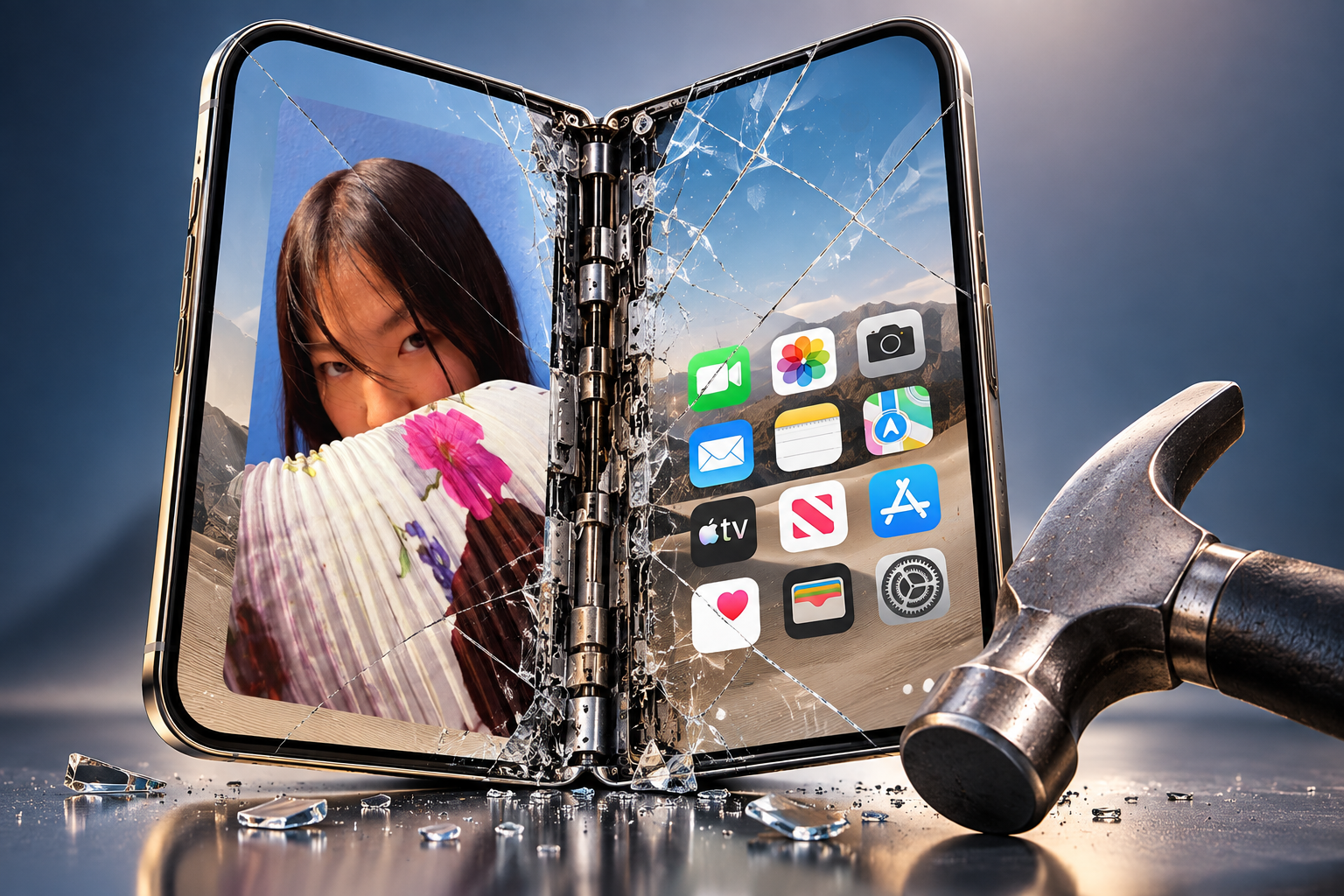
ANALYSIS: Repair, insurance and refurbishment specialists have warned Apple’s £2,000 (base cost) Duo could be too expensive to fix and insure, with damaged devices potentially being written off
Apple’s £1,999 iPhone Duo could prove considerably more expensive to repair and insure than a conventional smartphone, industry specialists have warned. One Apple repair specialist reckons a screen could cost £800 to replace.
Apple’s first foldable uses a complex hinge containing more than 100 components and combines flexible display layers, ultra-thin glass and tightly engineered internal components.


Apple has yet to publish UK out-of-warranty repair prices for the Duo, leaving insurers, repairers and the secondary market assessing the likely economics of fixing damaged devices.
Repair specialist iFixit is already sceptical about how repairable Apple’s first foldable will prove. It described foldables as impressive feats of engineering, from ultra-thin glass and flexible OLED panels to the tiny springs inside their hinges, but added: “So far, though, they’re not repairable.”

Said iFiti: Introducing the duo on a beach is bold for a hinged device. Hopefully Apple has solved the problems other hinged devices have when dust, sand, etc. are present. hat’s why we’re not very optimistic about the iPhone Duo.
“Foldables are an impressive feat of engineering, every bit, from the super-thin glass to the flexible OLED to the tiny springs inside hinges. So far, though, they’re not repairable. We’d love for Apple to prove us wrong. Until/unless they do, we’ll say the same thing we say every September: The most sustainable smartphone is the one you’ve already got.
Quinton Goddard of device protection specialist SquareTrade said Apple’s arrival could significantly expand a market previously dominated by Asian manufacturers.But he warned that damaged foldables could initially be more likely to be written off than repaired.
“Chinese and Korean manufacturers brought foldables to market years ago but they’ve stayed a relatively niche part of the market. A mainstream, high-volume entrant has the potential to change that calculation.
“Greater volumes will bring new economic challenges for insurers and repairers. .The flexible display and hinge make up a large share of a foldable’s cost, which pushes up repair costs and, in turn, the cost of insuring them, though display durability has improved considerably in recent years, “We’d expect resale and refurbishment values to be high but volatile until consumer demand solidifies’, said Goddard.
“For consumers, that could translate into a device that’s expensive to protect and expensive to repair – and, until the circular ecosystem around foldables matures, one that’s more likely to be written off than repaired or traded in when damaged.”
Envirofone CTO Sam Hargreaves reckons the Duo’s price raises the stakes throughout the handset’s lifecycle.
“A £1,999 foldable raises the stakes considerably for the entire device lifecycle. Flexible displays, complex hinges and tighter tolerances make repair and diagnostics more specialised and potentially more expensive.”
Hargreaves said insurers and refurbishers will need better information on failure rates, parts costs and residual values before devices can be handled economically at scale.
“The industry can adapt, but repairability and access to affordable parts will ultimately determine whether foldables become viable circular devices rather than expensive replacement propositions.”
Darren Corney, Head of Contact Centre and Operations Claims Fulfilment at SPB , said insurers could handle foldables at scale but expects the £1,999 Duo to be regarded as a higher-risk device.
Flexible screens and hinges are considerably more expensive and complicated to repair than conventional smartphone displays, he said.
“The insurance industry can handle foldables at scale, but the £1,999 iPhone Duo is likely to be treated as a higher-risk device because flexible displays and hinge mechanisms are far more expensive and complex to repair than traditional smartphones.
“As a result, insurers may introduce higher premiums, larger excesses and dedicated coverage tiers for foldable devices, with particular focus on accidental damage claims, while repairability concerns could make some non-accredited repair specialists cautious about supporting the device.
“Apple’s official repair network and self-service repair programmes should help support repairs, but the real challenge for insurers will be the higher cost and complexity of screen and hinge replacements rather than theft or loss”.
Nikolajus Gavrilinas, is CEO and co-founder of Lithuanian femtosecond laser company LITILIT. He says the Duo’s hinge is only part of the challenge of making a reliable folding devcie.
“Foldable phones bring together several difficult materials and components that all need to hold up to repeated folding, from ultra-thin glass and flexible display layers to compact printed circuit boards, ceramics and semiconductor parts. Many components used in foldable phones and other consumer electronics need to be manufactured with extreme precision.
“The market for electronic components keeps pushing manufacturing closer to its limits. Even a tiny defect can turn into a crack that makes the whole component unusable”
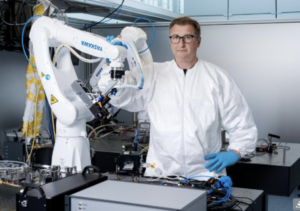
Commented Likewize’s VP Financial Services Ian Pillinger:
“Foldables are an exciting evolution of the smartphone category. For protection, repair and pre-owned there will naturally be some adaption required, but these are exactly the kinds of changes our industry has successfully adapted to as technology has evolved
Ricky Panesar’s repair companny iCorrect has pioneered sustainable Apple repairs “fix what Apple won’t”.
“It’s going to be a difficult device to repair compared to their other flagship models. Repair companies are repairing other fold models from other oems but not at scale. It’ll be an expensive repair which I expect Apple to tightly control. It’ll be interesting to see the screen prices once they’re announced. My expectation is £800. I’m also expecting them to raise the AppleCare repair cost for the Duo.
The industry’s concern is not whether it can repair and insure Apple’s new form factor, but at what cost and whether repairing a badly damaged Duo will even make economic sense.