Physical Address
Crimson Lynx Media Ltd
Scottish Provident House
76-80 College Road
London
HA1 1BQ


Physical Address
Crimson Lynx Media Ltd
Scottish Provident House
76-80 College Road
London
HA1 1BQ


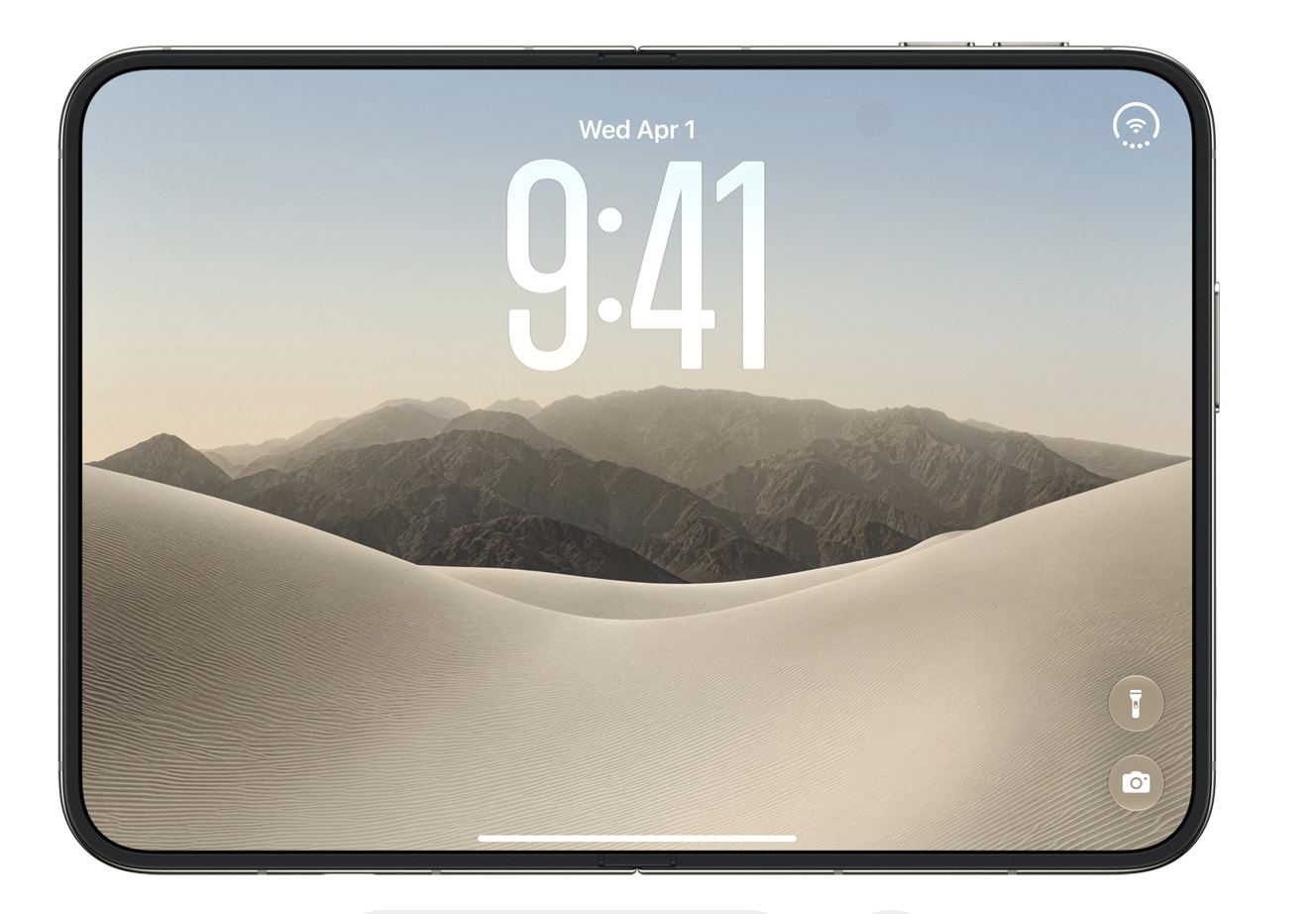
Apple’s first foldable iPhone creates a new super-premium tier as analysts predict its arrival could kick-start a slowing foldable market
Apple has finally entered the foldable smartphone market with the iPhone Duo, priced from £1,999 in the UK, in what analysts believe could provide the biggest boost yet to a category that has struggled to break into the mainstream.
The Duo was the centrepiece of Apple’s launch alongside the iPhone 18 Pro and Pro Max, Apple Watch Series 12 and Ultra 4 and AirPods 5, as well as a broader expansion of Apple Intelligence and Siri capabilities.

But one of the biggest surprises was Apple’s pricing strategy.
The 256GB iPhone Duo costs £1,999, rising to £2,199 for 512GB, £2,599 for 1TB and £3,199 for 2TB.

Apple is also offering the entry-level model for £66.63 a month over 30 months at zero per cent interest, potentially making a £2,000 smartphone a more palatable monthly proposition.
Pre-orders open on 16 October, with the Duo going on sale on 23 October.
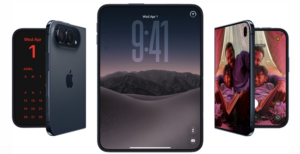
Apple has watched Samsung, Huawei and other manufacturers develop the foldable category for years before making its move.
IDC Vice President, Devices, Francisco Jeronimo believes Apple’s arrival immediately changes the competitive landscape.
“Apple entered the foldable market and, in one keynote, set the price and the standard every rival will now be measured against.”
Rather than having to explain what a folding smartphone is, Apple can concentrate on persuading hundreds of millions of existing iPhone users why they should now buy one.
The launch also comes at an important time for the category. IDC figures show global foldable shipments fell 15 per cent year-on-year during the first half of 2026.
China will be a crucial battleground, with Huawei dominating the country’s foldable market.
Apple’s arrival gives premium Chinese smartphone buyers another major choice while bringing the company’s enormous retail, marketing, developer and services ecosystem into the category.
PP Foresight founder and analyst Paolo Pescatore said Apple’s arrival could provide a major boost to foldables.
“Apple has taken its time entering this category and is now seeking to redefine what consumers should expect from a smartphone rather than simply following rivals,” he said.
Pescatore believes higher pricing across Apple’s conventional premium iPhone range could actually work in the Duo’s favour by narrowing the perceived financial jump to an entirely new form factor.
“Apple will now flex its considerable marketing muscle to kick-start demand and give the foldable category a major boost,” he said.
“I fully expect it to be an instant hit, benefiting the wider market and developer community while putting rivals firmly on notice.”
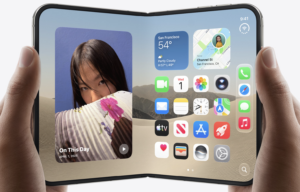
Pescatore also highlighted Apple’s increasingly split iPhone launch cycle as strategically significant.
Spreading major launches across different points of the year gives Apple the opportunity to create new upgrade cycles and revenue rather than concentrating so much attention on a single annual launch.
“That is a significant strategic shift and potentially a gold mine for the business,” he said.
Uswitch mobiles expert Ernest Doku also highlighted the significance of Apple separating its iPhone launches.
“Apple is giving itself two bites of the mobile market from now on,” he said.
“For the first time, its autumn line-up arrived without a standard iPhone – tonight was reserved for its priciest, most feature-forward models, the 18 Pro, Pro Max and Apple’s first foldable, the iPhone Duo.”
The iPhone 18 Pro starts at £1,199 and Pro Max at £1,299, both £100 more than their predecessors.
Doku described the Duo as “Apple’s biggest gamble in years” but pointed out that buyers are being asked to accept some first-generation compromises for their £1,999.
The Duo uses Touch ID rather than Face ID and has a smaller battery than the Pro Max.
“You could get an iPhone 17, an iPad Air and an Apple Watch for less,” Doku said.
But he believes Apple may have concentrated its engineering effort on addressing one of the biggest complaints about existing foldables which is the display crease.
“Apple has clearly spent its first-gen effort on the bit that matters most for a fold: the hinge,” he said.
“Early looks suggest a genuinely crease-free display, the complaint that’s dogged every foldable phone to date, so if it holds up in daily use, that alone could be the difference-maker against Samsung.”
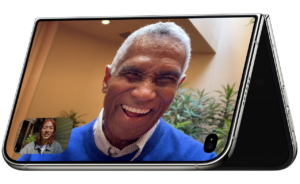
Apple’s decision not to replace the standard iPhone 17 this autumn could also have consequences for UK operators and retailers.
Reports indicate the standard iPhone 18 will arrive in the spring alongside the 18e and a second-generation Air.
That leaves the iPhone 17 as Apple’s mainstream model for another six months and Doku believes that could change the usual pattern of post-launch discounting.
“The iPhone 17 just became Apple’s mainstay for another six months, so unusually for a year-old iPhone, you’re not buying something about to be replaced, meaning we may not see networks compete hard on 17 deals this Black Friday,” he said.
Trade-in will also become increasingly important as buyers contemplate devices costing £2,000 and above.
Doku advises customers considering an upgrade to obtain a valuation before Duo pre-orders begin.
“Values run around 25 per cent higher in the weeks ahead of a launch, which puts more in your pocket towards the cost of an upgrade,” he said.
While pushing the iPhone into a new £1,999-plus category, Apple is simultaneously lowering the cost of entry to other parts of its ecosystem.
Pescatore said Apple’s continuing strength is its ability to combine hardware, software and services in a way few competitors can replicate at scale.
“Apple has once again shown why it should never be underestimated,” he said.
“The challenge now is to sustain this momentum, accelerate in areas such as AI and continue to give users compelling reasons to upgrade.”
Pescatore believes the strategy goes considerably further than this year’s upgrade cycle.
“AI and Siri are critical to Apple’s next chapter because the iPhone remains the main product through which most people experience the company every day,” he said.
Getting customers accustomed to using AI across existing products also gives Apple the opportunity to learn how people use the technology before introducing new devices.
Pescatore believes that provides a blueprint for future categories including Apple Glasses, wearables and devices for the home.
One potentially significant announcement received considerably less attention than the folding display.
Apple introduced Apple Reference Image, a standard designed to prove the authenticity of images captured using the new iPhone 18 Pro cameras and help identify whether pictures have subsequently been created or manipulated using AI. The feature will not initially be available in the EU or China.
As AI-generated images become increasingly difficult to distinguish from genuine photographs, establishing an image’s provenance could eventually prove more important than another increase in camera resolution.
Potential applications range from journalism and insurance claims to marketplaces, fraud prevention and evidence gathering.
IDC’s Francisco Jeronimo will join other industry leaders at the Mobile News Circular Summit at Hilton London Bankside on 17 November, examining how the industry can extract more value from mobile devices throughout their lifecycle.